


Akeilā suit hanger with solid bronze wolf emblem. The wolf's eyes absorb drops of pure cedar oil and protect your wardrobe against moths. Cedar oil included with hanger. Your wardrobe becomes a fragrant place for your garments but a hostile environment for moths and their larvae, making our hanger the guardian of your wardrobe.
A sign of life
Your garment will leave our workshop to become part of your life. Enjoy!
Most of our creations last 20+ years when properly taken care of. This means minimising dry cleaning, alterations and heavy pressing. We will help you take care of your suit whenever you need it.
However, not all fabrics last long. Even with a robust construction. But only recommending military grade fabrics would limit our creative process. Our priority is to create garments that express your personality and you enjoy wearing.
It's OK for garments to show signs of wear. It signifies life. And life is only precious due to it being finite. The same goes for your garments. With that in mind, we consider fabrics with longer lifespans first, so you can enjoy your suit for many years to come.

I'm a paragraph. Click here to add your own text and edit me. It's easy.

Pablo
The magical process of transformation through repetition places us at a cross-roads. We can repeat the miseries of history by abandoning the necessary responsibility of mastering our destructive habits and become slaves to the negative aspects of human nature, or we can choose to transform ourselves into Master artisans in pursuit of eternal beauty and creation.
Luxury for the client, misery for the tailor
Our entire process depends on our relationship with our clients. We cannot produce excellent work without liking our clients. Our experience has exposed us to the disconnect between the front-end of the workshop and the back-end. This disconnect stems from a division of labour that has otherwise served production well in large companies. The front of house introduces the client to the cutter, the cutter makes a pattern which is then given to the tailor. Once a tailor is done with his or her work, it travels back to the cutter who then fits and delivers the suit to the client.
As a result the cutter often gets most of the praise (of the public type) while the tailor receives crumbs of it. While the client is under the impression that a cheerful team made him or her a lovely suit in a jolly dolly mood, the truth is sadly but often far from it. The disconnect between the client and the tailor usually ends up with the tailor, responsible for the making, resenting the client. Especially when the client suddenly needs the suit sooner than expected or intricate details that take much of the tailors time for which he is not.
Resentment aside, it is always in the benefit of the client to be in close contact with the entire team. This gives the team an opportunity to actually connect to the individual they are trying to deliver excellence to. Tailors are not bureaucracies. They are artisanal workshops in which artistic and technical expertise must harmonise at the hands of human beings. Have you ever gave your best to someone you disliked?
Our commitments
1. Your time is precious; we are highly aware of the time we require from you create your garment. While first commissions require more time to complete, future ones don't. Once we have your pattern and know you and your tastes better, we require less time to make suggestions or conduct fittings. We simply have more relevant information which makes it easier for us to process it. We are always innovating to save you time whilst improving our products and services.
2. Your privacy; we will never mention your name, job title or country or specific descriptions that might lead one to either speculate or recognise your identity. The same goes for individuals associated with you. Tailoring is an intimate profession. We do sometimes refer to our clients. You might hear us say "One of our clients had similar experiences with this fabric".
3. Personalisation; we are committed to always make personalised recommendations. Tailoring can quickly become routine. Of all the fabrics we recommend, some may prove to be best sellers. It becomes tempting to recommend you our best sellers instead of something personal. Neither do we take favourites with bunches unless for a very good reason. By principle we always begin with a blank slate. We consider all options and narrow down based on your specifications. This means sometimes recommending the least favoured or sold fabrics.
4. Use our craft in the service of our clients; not to use our clients as an excuse to exercise our craft.
5. Commitment to our artisans; we are a for profit company. If our company does well, our employees must do well equally. This means that besides a monthly salary, our employees receive an annual profit distribution.
6. High quality materials; this increases our prices in general. High quality materials are not always luxurious. Some materials are expensive to produce or only produced in low quantities, making them scarce. Materials such as linings, leather hides fall in that category. Threads, tools, pastes, glues, needles and other equipment are sourced at high qualities to increase production value. In the final analyses, we are craftsmen who value high quality work in the service of our clients.
7. Never cut corners; If we see something that is not right, we will not hide it with a layer of lining. We will communicate it and correct it. The mantra is if I can see it, everyone can.
8. Saying no; we are happy to sell, but not if it means deviating from our standards. We will occasionally refuse ideas, styles or materials if we believe that these are against our standards or simply not something we would recommend.
We Don't Do House-Styles and Neither Should You
You are unique. House-styles are not. They are basic guides and don't work for all. They are not specific. Your style must be specific to you and you only.
We can't force a design on you if you require its opposite. Colours, proportions and style details should all be carefully considered and cherry picked to create your unique style.
Discovering your style is our expertise. Together we create a personal profile that will guide our choices for your suit. These are factors such as:
1. Colour
2. Facial Features
3. Lifestyle
4. Physical features such as body mass, posture and movement
5. Feel, comfort and practical use
2. Lifestyle
Environments can change the meaning of an outfit. This is why we have terms such as over or underdressed for the occasion. But the opposite is true as well. Outfits can change the tone and meaning of an environment as well. It is crucial for us to understand in which environments our clients find themselves. More importantly, to what degree they want to stand out or blend in. Cinematographers, set and costume designers are highly aware of the impact of wall colours, light quality and interior design on the characters in a film.
We don't like house styles
And neither do we judge our clients by stereotypes. House styles are technical specs. Personality is not discovered nor expressed through spec sheets. You cannot make art with requesting
1x mountain
3 1/2 clouds
7x trees in dark green
2x people walking in the corner.
Perhaps this formula works for better for propaganda. In our creation process, it is crucial to be absolutely clueless about our client. That does not mean that we don't do our home work. What it does mean is that we are open to receiving the individual as they would like to be perceived and maintain the curiosity about them that leads to unique results.
We advise the reader to look for tailors with the ability to be curious and accommodating. It is far more important to be dressed by someone who treats you like an individual instead of a mannequin. Everybody wants to look tall, slim, handsome and powerful. But not everybody has the same way in doing so. The pinstripe that makes one look like a charmer, makes the other look like a 1920's gangster who swapped his tommy gun for an iPhone.
We believe that styles are discovered. In fact, our entire process is built around this. To achieve this, here are x steps that we go through to understand what works best for your individual personality:
1. Colour Analyses
This is the process of comparing a variety of fabric colours referred to as drapes against our clients natural skin tone. The purpose of this step is to understand which colours highlight or mute facial features such as eye, hair and lip colour. Fortunately, colour perception is highly influenced by texture, surface size and the presence neighbouring colours. If a certain colour doesn't blend well with your skin tone, this does not mean that you're doomed not to wear it.
What Walt Disney, Rudyard Kipling and a Bespoke Tailoring Company Have in Common
The name AKEILĀ is inspired by Rudyard Kipling's Akela character of his timeless classic 'The Jungle Book'. The protagonist of the story (Mowgli), is found by a panther who takes Mowgli to the wolf pack led by Akela. As Mowgli grows up, he is taught the laws of the jungle to increase his chances of survival. The plan is for Mowgli to return to the man village.
It's a story of discovery and navigation. Finding ourselves and where we belong remains an eternal quest.
We are all like Mowgli growing up. Surrounded by funny creatures, in a jungle governed by mysterious laws. Not knowing who we are makes it difficult to find our place in the man village. Our contribution to society and civilisation at large is dependant on our mastery over ourselves. Our ability to control the fires of our passion and manifest them in ways that build rather than destroy.
AKEILĀ is founded on the principle of contributing to the historical chain of civilisation through arts and crafts. We are inspired by the work of ancient civilisations. People's power and ability to manifest reality through intellectual and creative endeavour is uncanny. We are inspired by our clients, who each are key players in this historical chain.
We believe that creativity, when harnessed and guided, can transform rebels without a cause into competent visionaries. Our bespoke tailoring isn't just about crafting suits; it's about extracting themes and details from our clients' life stories. We build garments that echo their unique narratives, empowering them to stand out in a world that demands conformity.

Expert Advice
-
How do I find my personal style?
-
How do I find my theme?
-
How do I know which fabrics suit me best?
-
How does construction affect the comfort of my garment?
-
Are heavier fabrics more durable?
-
Which types of fabrics last longest for trousers?
-
Which fabrics are most suitable for humid weather?
-
How do I recognise high quality fabrics?
-
How do I recognise high quality linings?
-
How often can my suit be altered?
-
How often can or should my suit be dry cleaned
- When does work done by hand matter versus work done by machine?
- How do I choose the right button size?
- If you require more than 3 fittings, the tailor is incompetent. Is this true?
- What do I do if I change weight or muscle mass between fittings?
- What's the best way to hang my suit?
- Should my suit always be in a cover?
- Why do tailors emphasise a high armhole?
- Is tailoring an art?
- What are the signs of a high quality bespoke suit?
- What is the difference between couture and bespoke?
- Are stretch fabrics suitable for bespoke tailoring?
- Will my suit get ruined under rain?
- Can holes in my suit be repaired?
- Are bespoke shirts worth it?
- Does a fused suit mean cheaply made?
- Is bespoke tailoring sustainable?
- Is bespoke tailoring ethical?
- Are bespoke tailors paid well?
- Which stains can I get out myself?
-
Should a bespoke suit be made by one individual?
-
How many people work on my commission on average?
-
Why are bespoke suits cheaper than designer items?
-
Why are some bespoke suits cheap?
-
How do I recognise a good tailor?
-
How do I deal with differences of opinion with my tailor?
-
How do I remove wrinkles out of my garment?
-
Why does my fabric shine after pressing?
-
What makes the work of one tailor more valuable than another?
-
What's the best way to pack my suit for travelling?
-
What's the best way to hang my jacket?
-
How do I know which colour suit me best?
-
Does Perfume discolour my fabric?
-
What's the best way to remove dust from my suit?
-
When does hand-stitching matter?
-
Are factory made suits of lesser quality than hand made ones?
-
How do I choose between MTM and Bespoke?
-
When is the high cost of a suit worth it?
Three Crucial Factors: Colour, Style and Lines
Description of three factors that define the success of a mature personality design.
Explanation on the role of colours with photo examples.
Explanation of style and how it extends the person in a specific direction that sets the basis for instant judgement and categorisation by others.
Explanation on the role of lines, especially around the face and how these can (de)-emphasise specific parts of the face to increase specific associations with a character. For example, collars that make jaws look wider or more symmetrical to project a healthy and strong appearance. Even include how car designers use this to convey a particular character in the car's face.
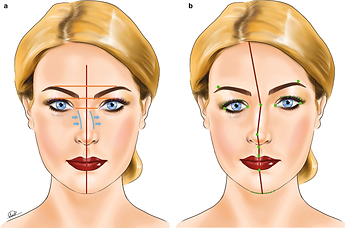


What Character Analysis Means For You
A description of how they are already partaking in character design at a basic level. Examples of how they decide not to wear something because it makes them look silly or like a character they don't want to be.
Add photos of someone in different outfits and show how outfit alone can make a person appear completely different.
Include perception factor of people and how certain perceptions benefit their success in relationships and business and career.

Case Study: John Wayne
Description of what character analysis is in film and literature with photos. Make it look like a sketchbook.
Then explain what it means for the ordinary person with before and after photos.
Include key factors of character analysis; colour and facial features. Show how these go hand in hand to create a personality.
Relate the personality to a theme.


Case Study: T-800
Description of what character analysis is in film and literature with photos. Make it look like a sketchbook.
Then explain what it means for the ordinary person with before and after photos.
Include key factors of character analysis; colour and facial features. Show how these go hand in hand to create a personality.
Relate the personality to a theme.
What is Character Analysis?
Description of what character analysis is in film and literature with photos. Make it look like a sketchbook.
Then explain what it means for the ordinary person with before and after photos.
Include key factors of character analysis; colour and facial features. Show how these go hand in hand to create a personality.
Relate the personality to a theme.


Materials

Leather
Editor in Chief

Leather
Assistant Manager

Brass
Programming Editor

Neodymium
Art Director